


 Log In
Ten Years of Music Tech
11 things that have changed the way we make music in the past decade
In the ever changing world of music tech, if you’re standing still, you’re going backwards. Technological innovation directly impacts how music is made. For example, when CDs came along (remember them?) their increased data storage meant longer songs and more tracks per album; that is until streaming services saturated the music market and compelled artists to get to the point.
Since Plugin Boutique landed in your laps in 2012, there have been plenty of evolutionary leaps in software and hardware. We've seen developments in Reverb Plugins, Changing Ways for Using 808s, the rise of Music Theory Plugins and many more. Some of it stuck, some of it didn’t, and going back through it all feels a little like unpicking the threads from your favourite jumper. We’ve taken a look at the major developments in the last ten years of music tech – who knows where we’ll be or how much of it will survive the next ten!
Software and hardware are more integrated
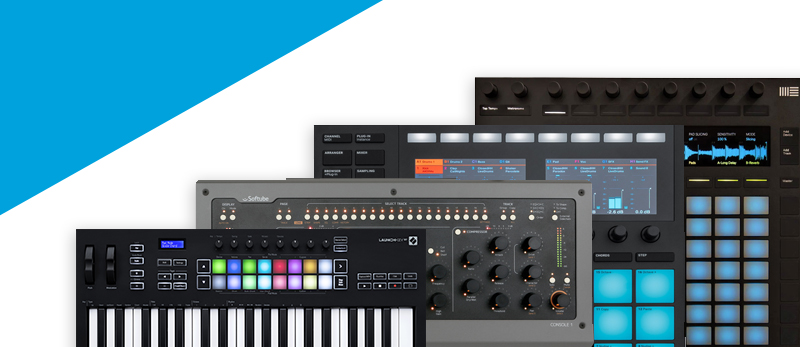
The infinite flexibility of software and the set-in-stone nature of hardware are at odds with one another, but the past ten years has seen them reconcile somewhat and fuse into more hybrid models. Most modern rigs are built around a laptop and a DAW, and equipment manufacturers have recognised that their gear needs to reflect that.
Ableton’s Push and other DAW controllers provide alternate workflows for studio sessions, and open up new avenues for live performances. As well as this there’s Native Instruments’ NKS standard, which brings the power of your installed software (by NI and others) under the command of a Komplete Kontrol keyboard or the Maschine hardware. Meanwhile, Softube’s Console 1 is an analogue mixing desk with unlimited freedom to expand through software console emulations and plugins.

Hi-hat rolls are a production staple
Music evolves in cycles, each marked by its own instantly recognisable sonic trend. The past ten years has seen the meteoric rise of trap music, and with that came a unique way of programming hi-hats. You know what we mean – clicky hi-hats unfurling in rhythmically complex bursts and super-speed rolls, at times cranked up unreasonably loud in the mix.
Trap music had been heating up since the early 00s, but in 2012 it bubbled over into other genres, with a host of electronic music producers emerging that incorporated hi-hat rolls and other elements of trap into their songs. The sound was everywhere, and its popularity propelled trap artists to the top of the pile, with producers around the world staying well acquainted with their triplet grids ever since.
Modular synths are here to stay
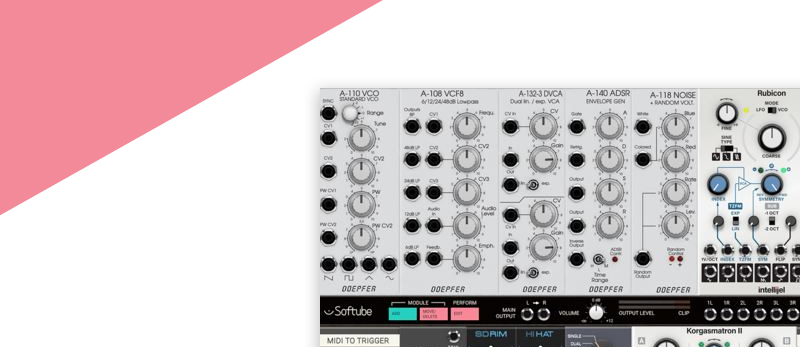
As plugins and computer software became more and more trusted, and DAWs became ‘just the way we all make music’, there was an equal and opposite reaction brewing in the land of music hardware. With its tactile freedom to patch, its appeal to our collector’s instinct, and its general lack of preset recall, modular synthesis represents a completely different world to music software.
Thanks to Doepfer’s ‘Eurorack’ standard, the modular synth boom was sparked by a huge interest in making music physical again, and it’s been fuelled by a raft of boutique manufacturers. That Eurorack boom was already in progress ten years ago, but the modular mushroom cloud has continued to expand ever since.

Nowadays we all have to consider streaming
When Plugin Boutique started ten years ago, streaming services were already around, but they hadn’t yet become the de rigeur method of listening to music. Fast forward a decade, and you’ll struggle to find people who don’t have a subscription to Spotify, Apple Music or one of the other platforms jostling for pole position. Streaming is king, and today’s producers have to factor it into their planning.
So how has this changed things for today’s producers? First there’s distribution, with services like DistroKid, CDbaby and TuneCore offering a way to take single files and get your release onto the ‘shelves’ of multiple platforms. Next, there’s the collection of payments from all these online services, connecting with your community, and making sure your music appears in all the right places. Next, mixing and mastering, which has changed too, as you’ll see in our next point.
Polyphonic MIDI has taken off
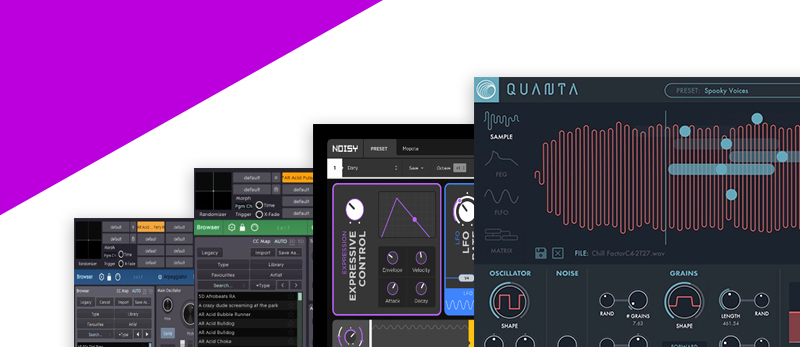
It’s very easy to look at a revolutionary new technology” being touted online and to just write it off as a flash in the pan. That’s what a lot of people did with MPE. Originally called “Multidimensional Polyphonic Expression”, and now officially adopted and standing for “MIDI Polyphonic Expression”, MPE lets you change properties of individual notes separately. In other words, you can play a chord and pitchbend, modulate or apply an effect to single notes from that chord, separately, while all notes are held down.
MPE was given a big boost by London-based funding magnets Roli (the Seaboard), as well as by music tech veterans like Roger Linn (the Linnstrument) and innovative new controllers like the Haken Continuum.
None of these controllers would have made much impression if the software world hadn’t been putting out MPE-compatible software to play with them. Synths like Audio Damage Quanta, Expressive E Noisy, and FXpansion’s Cypher2 and Strobe2 have more than risen to the challenge of providing expressive software instruments.

The Loudness Wars are (kind of) over
In 2014, the Audio Engineering Society and European Broadcast Union got together to create a new standard for loudness, that specified both a way to measure the perceived loudness of an audio signal, and a target level for that signal. It might have flown under your radar at the time, but when they settled on “EBU R 128” their decision had big consequences for mastering music.
Nowadays, streaming services will turn tracks up or down for listeners based on their perceived loudness. Anyone mastering a piece of music to squeeze as much loudness as possible from it will, today, simply be turned down. Many have said that this marked the end of the loudness wars, but you can still assume there’s a group of Neurofunk producers in a jungle somewhere who haven’t got the message yet.

Analogue emulation can bring back the past
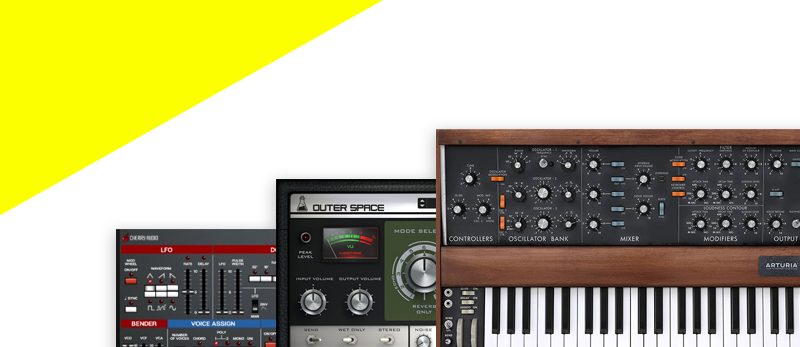
Regardless of how far we venture into the future, the lure of the old ways never really goes away, does it? Whether it’s the warble of tape or the richness of a vintage synth, there’s something irresistible about the sound of analogue, albeit something much more deterring about the price tag that comes with it.
Fortunately, the perceived quality gap between digital and analogue sounds has greatly reduced, and nowadays producers who are eager for a piece of classic gear can grab a software emulation for a fraction of the price of the original hardware. Cherry Audio do a fantastic job of reanimating classic hardware synths like Korg’s Memorymoog or Roland’s Jupiter-4 at bargain prices, while Arturia’s V Collection is a veritable anthology of vintage synthesizer and keyboard recreations. Alternatively, you can find buckets of unpredictability in Audiothing’s range of eccentric analogue effects emulations, and enjoy A-grade studio units thanks to Softube’s partnerships with top notch hardware manufacturers.

The 808 kick is a bass instrument too now
By increasing the Release and raising the pitch of the TR-808’s kick drum, producers transformed it into a bass sound that has now become an instrument of its own. These days there’s nothing more likely to get you hyped up than the thud and rumble of the 808, which is a huge element of trap and drill music – two of the most popular genres around.
This technique wasn’t invented in the past ten years – Miami bass and jungle music were in-the-know long before many of today’s genres – but using the 808 kick as a bass sound has risen massively in popularity in the past decade, and the patterns have become more and more hard hitting and in-your-face as a result.

Social Media became music promotion 101
Ten years ago, most social media users were on Facebook and Twitter, while companies like Snapchat, Instagram and the live streaming giant Twitch were in their infancy. These days, musicians can count on all these services and more to organise their brand and promote themselves to enormous potential audiences.
Instagram, for instance, is a mailing list, advertising platform, networking hub, PR tool, shop and creative canvas rolled into one. Gone are the days of relying on press placements to spread the word of releases and bolster your brand image, now artists have complete control over how they present themselves without relying on editorial gate keepers deciding what should or shouldn’t be covered.
And who could forget Lil Nas X redefining the way music could be marketed with his single Old Town Road in 2018? The 19 year old started relentlessly posting clips on TikTok using his catchy, tongue-in-cheek country/trap mash-up as a backing track and it quickly became a viral phenomenon.
Old Town Road would go on to become the fastest song in history to gain diamond certification (10,000,000 equivalent sales) and stayed at number one in the U.S. Billboard charts for 19 weeks – the longest run at Number One ever – all thanks to a few clips posted on TikTok.
Music Software powered by AI
OK, so it’s probably not that useful in your favourite compressor or EQ (although sonible’s smart:comp could change our mind about that), but beyond being a tech buzzword [buzz abbreviation?] of the decade, AI has its uses in music software.
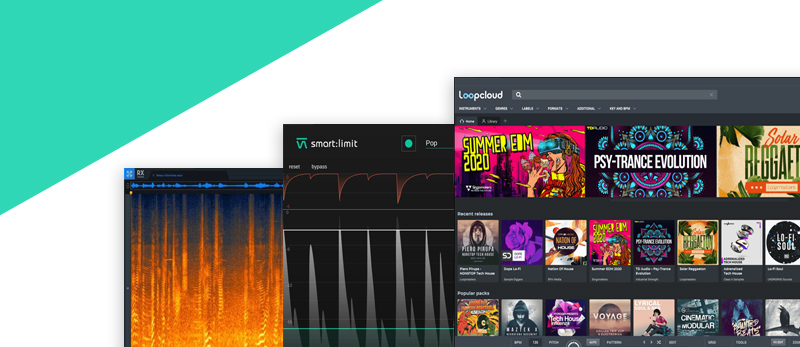
iZotope’s RX package has used machine learning to identify and repair a host of audio problems, from noise to reverb. Meanwhile, Loopcloud uses Jamahook AI technology to identify samples that sound similar to what you have selected. Throw in AI-assisted stem isolating and online mastering services, and there’s a growing sense that we might be seeing a lot more of this kind of thing in the future.
There are more ways to make money now
In a world where streaming royalties are often maligned, musicians have to earn a living in whatever way they can. Fortunately for us, other types of creators are in the same boat, and platforms like Patreon and Subscribestar offer a way for true fans to show their support.
There are also more ways for producers to make music besides from simply releasing music. The beat economy is thriving, hip hop producers can make instrumentals and upload them to platforms like BeatStars where rappers and vocalists can buy the rights to use the beat in their own track.
On top of that, the world of music production hasn’t been immune to the internet wide trend for education. Producers of all levels have been getting in on the game. Whether it be through specialist education platforms like ProducerTech, or by sharing your knowledge on platforms like YouTube and Instagram, producers of all levels and stages in their career can teach and get paid for it.

Other articles
The Ritual: A Hybrid Live Electronic Night In a Victorian London Church
When we think of electronic music, we usually picture underground clubs, concrete warehouses, or festival tents. But on Saturday 28th of November, something completely different will come to London: a hybrid night of live/DJ electronic performances inside a Victorian church. Brought to you by TWAN, The Ritual will take over St James Church in West Hampstead for a one-off immersive experience. Blending live hardware synths, expressive piano, a high-end sound system, and atmospheric visual desi
Unmissable Bundle Deal from Girls Make Beats – Sharing Spotlight
Play it forward with our latest Sharing Spotlight deal – come away with a great deal and give to a good cause while you do so. We are continuing our support for music-making communities with Sharing Spotlight, an initiative that highlights organizations working toward diversifying the music industry. We do this by offering a bespoke bundle of discounted plugins curated by our featured organization. When you purchase through its unique link, 15% of each sale goes towards supporting that comm
Recreating a Classic Analogue Mix Chain with Plugins
Digital audio production is the modern standard, yet it lacks the colour and life of classic analogue hardware. Learn how to breathe life into your mix bus As music production has overwhelmingly shifted to the digital domain over the last few decades, producers and artists now face the reality that working purely in the box often creates cold, dry, harsh, and lifeless recordings. That’s why many producers are turning to analogue-simulating software to breathe life and warmth of classic hardwa
Analogue Emulation Plugins: A Buyer’s Guide for Mixing with Character
These VSTs are some of the top choices to turn your DAW from a cold, sterile piece of software into a warm, colourful, lived-in studio setup Music software has come a long way, and while we used to use technology to remove imperfections and small problems in the real-world studio, today we actively use it to put these things back into our music. The number of analogue emulating plugins that are out there is truly astounding, with each one doing a slightly different thing on your mix channe


