


 Log In
Artist Insight: Marius de Vries on Creativity & Collaboration
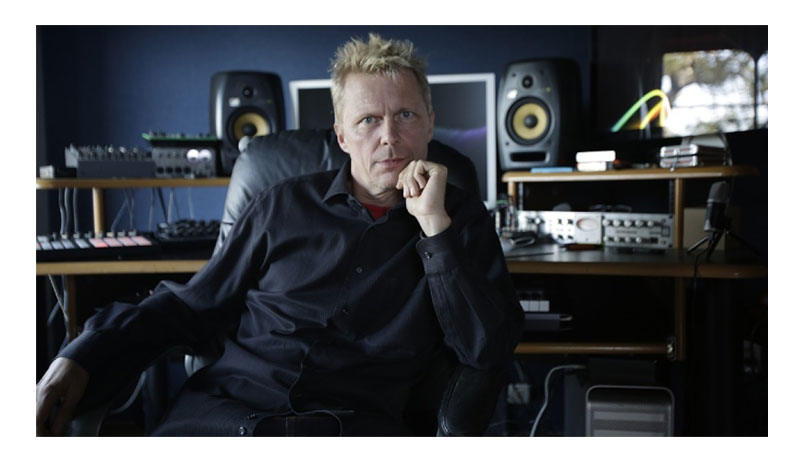
In between producing for the likes of Bjork and Brian Eno, Marius de Vries has played pretty much every role there is to play in creating world-renowned music. We caught up with the grammy-award winning composer to find out about his latest work on the film CODA, directed by Sian Heder (Orange is the New Black, Little America), his approach to film scoring, and the gear he uses to keep him creative.
Congratulations on your score for CODA (dir. Sian Heder). Can you tell us how that came about?
Thank you! I was first aware of the project in its early stages when it was at Lionsgate; when Patrick Wachsberger left the studio to set up Picture Perfect he took the rights with him. We had worked together on LaLaLand; he reached out and asked if I was interested in getting involved, we set up a meeting with Sian in NYC, the conversation started there and we connected creatively… the rest was history!
What was the experience like to collaborate with Sian Heder?
Sian is great. A very focused and thorough director with very strong, clear instincts. She doesn’t have any real musical background and I know she was apprehensive about the complexity of the musical requirements for the movie, with all the live onset recording she wanted to do, and the whole musical performance aspect for Emilia in particular, so it was nice that Nick (Baxter, music producer on the film) and I were able to make her feel safe and able to explore.
What is your starting point for scoring a film like that?
We had to start by confronting the interesting issue that in a film about - and acted by - deaf people, many of the dialogue scenes are essentially silent. Which makes the music appear to occupy far more space than we are used to. And she was very insistent that the music be supportive rather than emotionally leading, so it became an exercise in delicacy, especially in the first half, where we worked hard to be unobtrusive and let the story lead.
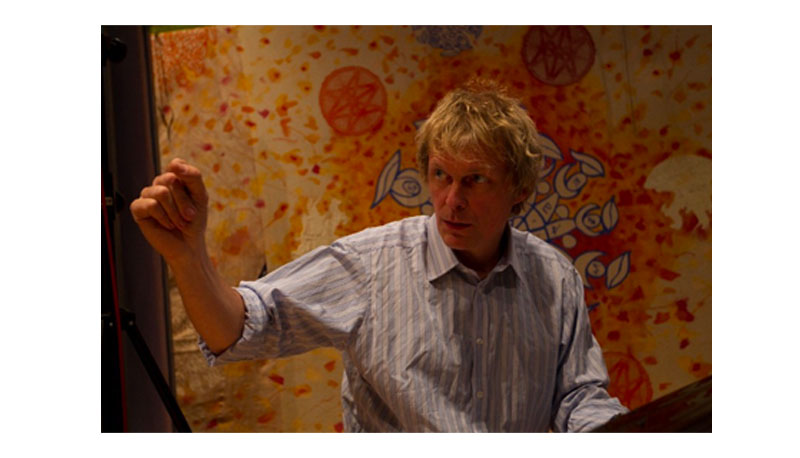
You have played a myriad of different roles on films across your career. How has your approach to film scoring developed across your career?
My first score (which I co-composed with Nellee Hooper and Craig Armstrong) was Baz Luhrmann’s Romeo + Juliet, and broadly speaking, that amalgam of song and score which worked so well there has set the tone for much of my work since. With Moulin Rouge I moved more into the word of true musicals, which I’ve done a lot of since, but truth be told what I like best is variety and I’m never happier than when my next project is radically different from the one before it.
Can you tell us the differences or similarities between your approach to producing a soundtrack album for La La Land and writing the score for CODA?
First of all, every project is different and has its own particular challenges. And yet in a way they are all equally difficult, although the difficulties can take many shapes. I guess the main obvious difference here is that on La La Land I was a producer working with a composer (Justin Hurwitz) whereas on Coda I was a composer working with a producer (Nicholai Baxter). Again, I appreciate the variety that wearing different hats brings with it.
Can you tell us about your favourite pieces of gear/plugins you might have used on these projects? How have these helped you creatively?
In the heat of production, efficiency and speed are of the essence, and so the more transparent and organized your studio set up is, the less time will be wasted. One of the silver linings of the slower pace of 2020 was the chance to explore corners of my studio that had been - metaphorically or literally - gathering dust. Picking up my guitar again, building a pedalboard, getting treasures like the VCS3 and the ARP2600 better integrated into the setup. Diving deeper into favourite synthesizers - software and hardware, exploring granular synthesis in more depth, and so on. But I spend the vast majority of my time face to face with Logic Pro.
Within that, obviously, I have “go-to” solutions, although these change from project to project - I always start a movie or an album by building a new template which will evolve through the life of the project and contains instruments and patches which are tailored specifically - often I imagine an ideal room full of musicians and aim to simulate that in the template. And often I start with a process of somewhat abstract sound design - the kind of stuff you simply don’t get time to do when deadlines are looming.
"The more you put into learning an instrument or a tool, the more it will give back."
Things that have been particularly valuable to me this last year, apart from Logic: Loopcloud. U-He synths. Synapse and Cherry Audio synths. Phase plant. My VCS3. Morphagene. Gamechanger Plus pedal. Hydrasynth. Deckard’s Dream. The new Plasmonic synth from Rhizomatic. Arturia’s MiniBrute. Apologies to the many left off this list!
What do you think the future holds for the music-making process and the way creatives collaborate, whether it be in the world of film scoring or music production?
Lockdown has really stretched our capabilities in terms of remote collaboration, that’s been interesting. So much more efficient in some ways, so much less satisfying in terms of personal contact. In many ways this is a tremendously exciting time for electronic music making - there are SO MANY TOYS flying at us all the time. The challenge is not to become overwhelmed by the valuable choices we have. And always to remember that the more you put into learning an instrument or a tool, the more it will give back, that’s more difficult with the myriad of available options we all have now.
How has Plugin Boutique played a role in your creative process?
Well, simply put, it’s one of my favourite places to shop, for breadth of choice…
Lastly, Plugin Boutique has a big community of young producers, composers and music-makers alike. Do you have any nuggets of wisdom you can share for a composer or producer hoping to step into the world of film music?
Most of this is covered above - choose your instruments wisely, and make a point of mastering them. And remember that at LEAST half the job is managing the personal relationships involved. Try to be a good human, work hard, read widely, always be curious, and be someone that people want to be in a room with! The rest is luck, which should be managed by understanding variance and not investing in the outcome of what you are working on. If the work is rewarding, you are rewarded!
Words by Freddy Mercer
Other articles
ESEA Heritage Month: 5 Artists You Should Know About
Founded in September 2021 by besea.n (Britain's East and South East Asian Network), ESEA Heritage Month celebrates the culture, history, and contributions of East and Southeast Asian communities across the UK. To mark the month, we’ve partnered with ESEA Music, a UK-based, community-led non-profit founded in 2021 to empower ESEA artists and music professionals, to spotlight five incredible independent artists shaping the UK music landscape. Jeremine Chan Malaysian Chinese • Multi-Genre / E
Aaron Suiss Builds Self-Actualization From Diva’s INIT Patch
Presets are a normal part of modern production, and Aaron Suiss is pretty open about using them for some of the biggest layers in his latest release, “Self-Actualization,” which spent a week in the Hype Charts on Beatport. The bass and pad began with Plug Hugger presets inside u-he Diva. But the star of the show was the arpeggiator, which he created from INIT after the options he auditioned just didn’t bring the emotional depth and power the record needed. Created with Enzo Vood and released
Synth Month Sale: The Best Deals on Synth VSTs & Bundles
It’s September, and that only means one thing for all you producers out there – it’s Plugin Boutique’s Synth Month, the ultimate synth plugins sale! Across the month, you can buy synthesizers at massive discounts. Expect big savings on the best software synths, from characterful vintage synth emulations all the way through to cutting-edge modern sound machines. Not only that, but you’ll be able to pick up some deliciously discounted synth bundles that can’t be missed. To celebrate, we
Free VST Plugins You Should Actually Get
[Article Last updated: 12 September 2026] – There are a lot of free plugins out there, and you can sometimes feel overwhelmed by the paradox of choice. Thankfully, we've done the hard work, so you don't have to. Here’s a carefully curated list of the best free plugins that pretty much any music producer can benefit from. We even update this list approximately weekly to keep you informed of the new free plugins arriving on the scene. We’ve been especially considerate of plugins with a wi


