


 Log In
30 Years of VST
This year marks an impressive, significant, and maybe even surprising milestone in the world of music production: it’s been thirty years since the VST standard was launched. As part of ‘Cubase VST’, the latest version of Steinberg’s DAW, version 3, provided a framework on which companies would start to build their own, effects, instruments and even MIDI processors.
By the way – we’re celebrating thirty years this month with a very special set of re-issues: The first three VST instruments, Karlette, Neon, CS-40, LM7 and VB-1 have been brought back by Steinberg, with their original interfaces intact! Check them out here.
Back in 1996, the creator of ‘Virtual Studio Technology”, Steinberg – makers of Cubase and other landmark production software – may not have expected that they were launching something that would change the lives of producers everywhere. They probably didn’t reckon that they would underpin a whole sub-industry that would rival even the DAW market. They surely didn’t expect that a whole industry would grow to take advantage of the standard, with creators, designers, investors, consultants, YouTubers, and yes – even websites like this one. But the idea sort of … took off.
How VST Changed Music Production
In the thirty years since VST was introduced, it went through a number of changes as the world of music production – and indeed, the world of computing itself – found its way. Today, plugins are a ubiquitous part of how most producers create music. Those three letters have even become a byword for plugins themselves.
Thanks to the plugin standards, music has become a collaborative enterprise whether we know it or not. A hive professionals from sound designers to circuit emulators can share their musical input with the world. Even if they’re not programming the notes inside the DAW, they’ve been brought into your project thanks often to a plugin instrument or effect, made possible and set in motion by the VST framework.
In this article, we’ll list some of the world’s favourite “VST” Plugins of the early years, but first, we’ll take you through a timeline of significant changes to the standard.
A Brief Timeline of the VST Format
1996 – The Introduction of VST
The VST format was launched with Cubase version 3, and was originally built for effects only. The main advantage to music makers was that VST plugins could be run natively on the computer running Cubase, rather than being run on a dedicated DSP card.
Cubase VST launched with four plugins: Espacial (a reverb), Choirus (a chorus), Stereo Echo, and Auto-Panner.
The name ‘Cubase VST” was taken by the software. It would stay with it for a few years, before being branded Cubase SX.
1999 – VST 2.0: Instruments are Introduced
VST wouldn’t have grown into the force we know today without becoming a framework for the synths and sampled instruments that have risen like superstars. In 1999 Steinberg released the “VSTi” specification as part of VST 2.0. Like three years beforehand, this was done alongside the release of their own synth, Neon, which we can call “The first VST synth”.
You can read more about Neon below, and you can try it out yourself as part of the Steinberg Classic Collection re-issued instruments bundle, which is free.
2006 – VST 2.4 is Reached
Where have you heard of VST 2.4 before? This was where the VST standard reached before the release of VST 3.0, and while this can be seen as an ‘old’ standard, some of the world’s biggest music software companies’ plugins still haven’t moved past it.
2008 – VST 3 is Released
The current iteration of the VST standard is 3.8, and although some DAW developers took a while to get around to supporting VST 3, it remains the main cross-platform plugin standard in use today for music makers everywhere.
2025 – VST Becomes Open-Source
Last year, Steinberg opened up the format under the MIT license, meaning that the VST 3 can be freely used, modified and distributed. Making VST a less proprietary standard means its future is tied to the whole music software community rather than a single company.
Forgotten Favourites: Landmark VSTs You May Miss or Have Missed
Steinberg Neon
The first VST instrument plugin, from the makers of the standard
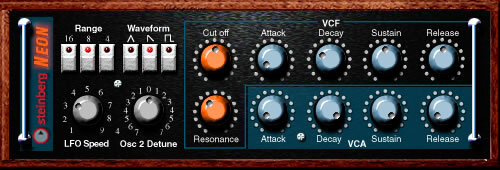
Steinberg Neon – via KVRaudio
For version 3.7, Steinberg introduced the VST Instrument standard into Cubase, and with it the first VST instrument, Neon.
It looks very different to what we’re used to in 2026 – and yes, that’s how small it was, although pixels were much larger on the screen in those days – but Neon represents a quiet revolution in plugins. It gave us three waveform and three oscillator settings, filter cutoff and resonance, ADSR amp and filter envelopes, an LFO with a ‘Speed’ control, and a Detune control. How far we’ve come since then.
You can get your hands on Neon as a free re-issue, alongside four other historical instruments, as part of the Steinberg Classic Collection.
Native Instruments Pro-Five, Pro-52, Pro-53
From 1999, one of the earliest analogue models grew into one of the most popular
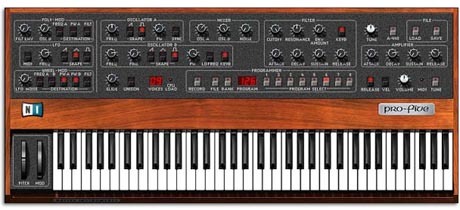
Native Instruments Pro-Five – via Vintage Synth Explorer
At the dawn of VST2, Native Instruments released Pro-Five (above), their plugin emulation of the Prophet-5 synth from the 1970s. It may feel unusual from today’s standpoint, but a plugin emulation of a real hardware synth was something very new back then, although Pro-Five had a rival for its vintage tones in the form of Steinberg’s own Model E.
The Pro-Five concept managed to stick with the times, with Native Instruments launching updates in the form of Pro-52 in 2001 and then Pro-53 in 2002. Pro-53 stuck around for a few versions of NI’s ‘Komplete’ collection, but was then retired.
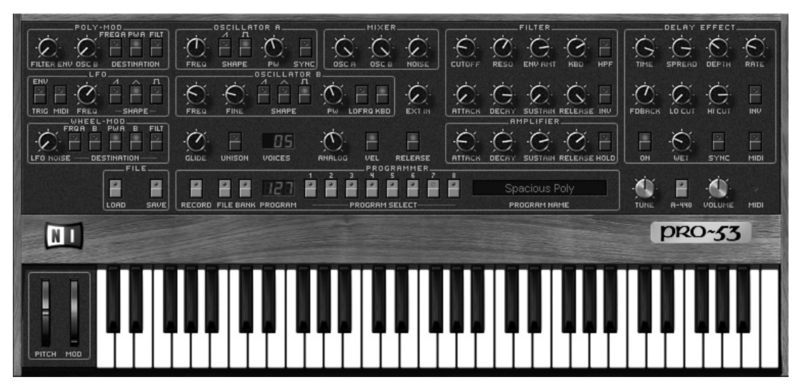
Native Instruments Pro-53 – as seen in the manual
Propellerhead ReBirth
This absolute classic wasn’t actually a plugin, but we’re giving it a posthumous induction anyway
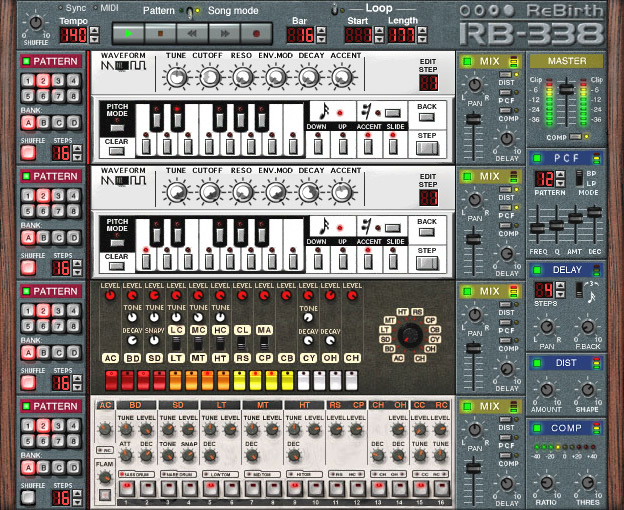
ReBirth – aka ReBirth RB-338 – via KVR
If the VST Instrument standard wasn’t available until 1999, then ReBirth, released in 1996, was actually ahead of the game. This ‘virtual studio’ took two emulations of a Roland TB-303, plus one each of Roland TR-808 and Roland TR-909 emulations, and stacked them together on the same interface, to play with in sync.
ReBirth was a smash hit, and the seeds were sown for its makers to release the full DAW, Reason, two years later, bringing the best of the analogue studio philosophy into an even larger realm. That’s the impact size that ReBirth had, and it wasn’t even a plugin.
Synth1
This classic freeware instrument is a real legend amongst producers
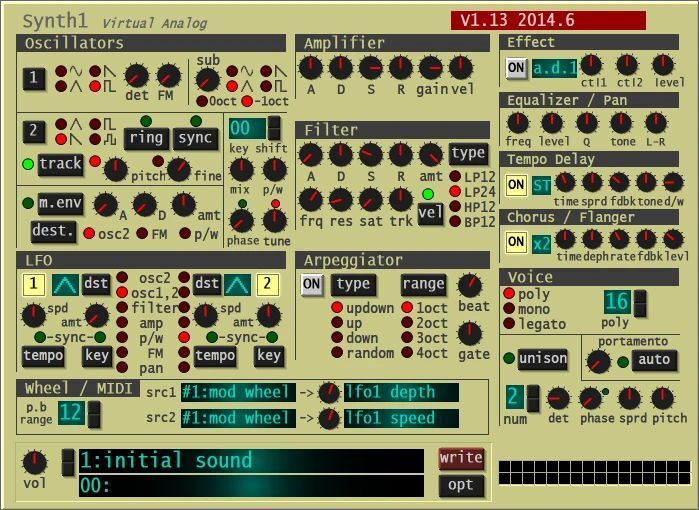
Based on the Nord Lead synth, this synth by Ichiro Toda (operating as Daichi Laboratories) puts the second generation of the hardware into plugin form, boosts the polyphony from four to 16, increases the power of the onboard effects, and reduces the Red dial a whole lot!
For years, Synth1 was pretty much the best – and most talked about – free synth available, but in recent years its popularity has, understandably, declined. Given that this is freeware, it’s technically still possible to get Synth1, but compatibility is getting harder and harder to guarantee.
reFX Vanguard
Although recently reborn in 2023, we still can’t resist putting the original Vanguard synth into this round-up
Between 2004 and 2016, Vanguard was one of the new breed of soft synths. The teething troubles of VST and plugins in general had been mostly dealt with, and developers were pushing the envelope as CPUs were becoming more and more able to deal with the demands of audio processing.
After a period of being unavailable, Vanguard was recently re-released for version 2, making one particular member of the Plugin Boutique team very happy.
Native Instruments Absynth
It was a cult classic that went through five versions, and now Absynth has run empty
Absynth is a line of physical modelling synths with something of a cult following. The synth made it from version 1 (2000) as a Mac-only synth initially, to version 5 (2009). When it was released, the synth had waveshaping and envelope settings that helped it lead the pack in terms of producing new and unheard-of sounds.
Absynth was a favourite of many, but it was finally discontinued in 2022. The original Absynth was released by the company Rhizomatic, which is now providing successor products cut from the same cloth.
Camel Audio Plugins
Here today, bought by Apple tomorrow, somewhat brought back in another form after ages later
Technically, you could say that the Camel Audio plugins still exist. When the company was bought by Apple in 2015, their Alchemy synth-meets-sampler and CamelPhat effect were two of the most beloved plugins by producers of all stripes. After what felt like a long absence, Alchemy resurfaced as part of Logic Pro, but CamelPhat seems to be lost at sea.
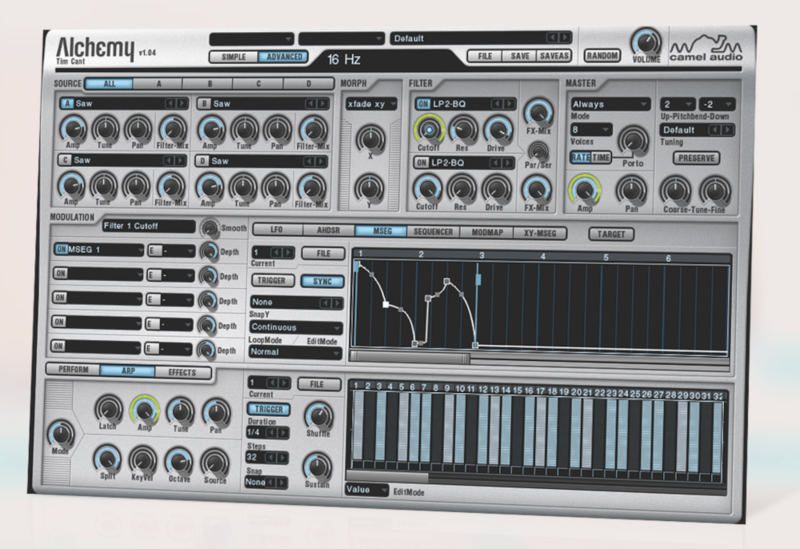
Camel Audio’s Alchemy was loved by producers of many genres
In a more positive end to the story, there are projects out there that have attempted to pin down the sound and processing behind CamelPhat, but whether they’ve managed successfully? It’s hard to say unless you still have the original on your system.
Sylenth1
A high-point in virtual analogue history
What can be said about Sylenth1 that hasn’t already been said? This two-layer, four-oscillator synth was the go-to synth for many producers, and was something of a pinnacle for “virtual analogue” in the days when ‘that sound’ was still highly sought-after.
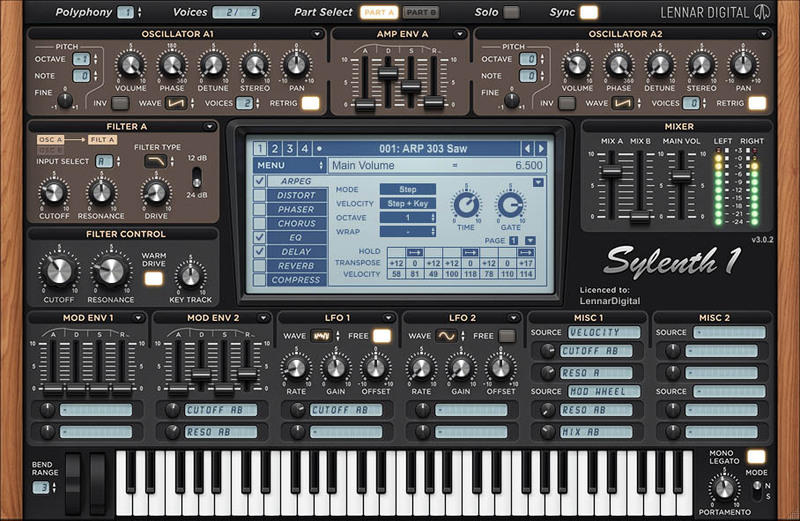
Sylenth1 was only really unseated when Serum managed its explosive rise to the top. It’s still technically available to buy, but it’s by no means the top of the synthesizer tree these days.
VSTs Part 2: Further Reading
We’ve seen a timeline of the history of the VST Standard, and we’ve relived some of the world’s favourite ‘forgotten’ plugins along the way. Next, check out the next Ten Years of Plugins (2012 to 2022) on Plugin Boutique to relive the history of some of the best tools that are still out there today!
Other articles
Aaron Suiss Builds Self-Actualization From Diva’s INIT Patch
Presets are a staple in modern music production, and Aaron Suiss is refreshingly open about using them for some of the biggest layers in his latest release, “Self-Actualization,” which recently spent a week in the Beatport Hype Charts. While the bass and pad began as Plug Hugger presets inside u-he Diva, the star of the show is the arpeggiator. After auditioning several options that lacked the emotional depth and power the record needed, Suiss built the arp entirely from scratch using an INIT
The Best Music Software Deals This Week [Live List]
As the music production landscape evolves week by week, so does the opportunity to save on powerful creative tools. New plugin releases, flash sales on VSTs and limited-time deals on music software can appear from any angle, making it harder than ever to keep track of what’s worth your attention. Whether you're looking for the latest bundles on offer, or even deals on exciting virtual instruments, it's as important as ever to stay up to date on what we have to offer. That’s where our live g
ESEA Heritage Month: 5 Artists You Should Know About
Founded in September 2021 by besea.n (Britain's East and South East Asian Network), ESEA Heritage Month celebrates the culture, history, and contributions of East and Southeast Asian communities across the UK. To mark the month, we’ve partnered with ESEA Music, a UK-based, community-led non-profit founded in 2021 to empower ESEA artists and music professionals, to spotlight five incredible independent artists shaping the UK music landscape. Jemerine Chan Malaysian Chinese • Multi-Genre / E
Synth Month Sale: The Best Deals on Synth VSTs & Bundles
It’s September, and that only means one thing for all you producers out there – it’s Plugin Boutique’s Synth Month, the ultimate synth plugins sale! Across the month, you can buy synthesizers at massive discounts. Expect big savings on the best software synths, from characterful vintage synth emulations all the way through to cutting-edge modern sound machines. Not only that, but you’ll be able to pick up some deliciously discounted synth bundles that can’t be missed. To celebrate, we


